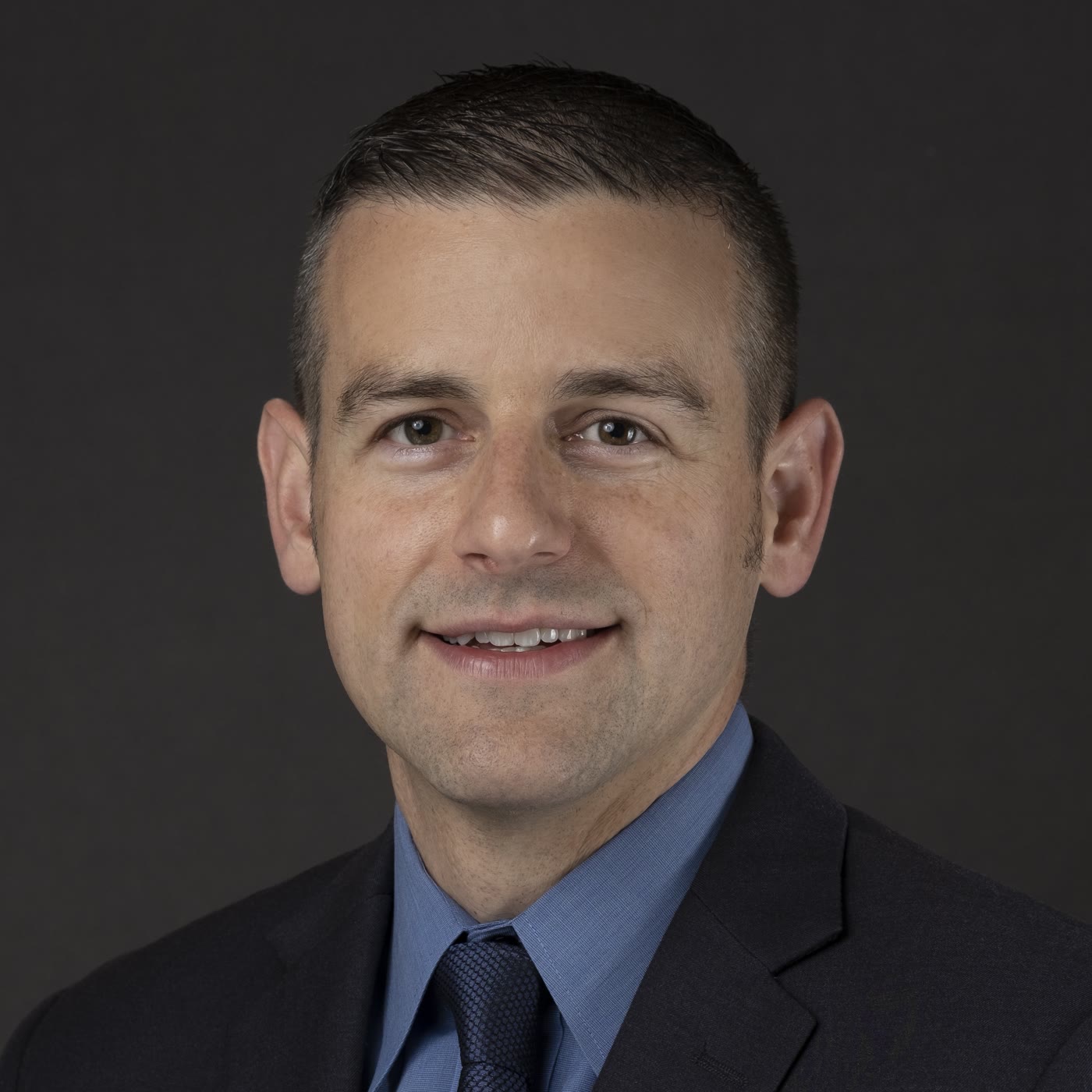
Supporting New Teachers with Anestis Kerzelis & Dr. Avi Slivko
How districts can give new teachers a structured, well-mentored first year
In this episode of The Teaching Show, Anestis Kerzelis and Dr. Avi Slivko of Classroom Success Solutions share how districts can support new teachers through their first year, including:
Why time, not good intentions, is the biggest roadblock to new teacher support once the school year gets busy
How a structured, year-long cycle of self-reflection, monthly goals, and mentor debriefs gives mentors and new teachers a clear focus
Why rituals and routines come first, and what a ten-month calendar of strategies looks like
What districts should look for in a mentor, and why vetting and paying mentors matters
How informal mentors, from veteran colleagues to a 19-year-old teacher aide, shape a new teacher's first year
About the Guests:
Anestis Kerzelis is an educator, instructional leader, and clinical faculty member at Montclair State University. His book, Classroom Success Simplified: A Reference Guide for Best Teaching Practices, is forthcoming in Spring 2027 from Routledge.
Dr. Avi Slivko brings extensive experience as a principal and district leader and currently serves as Director of Human Resources at Middlesex County Magnet Schools in Middlesex County, New Jersey.
Together, they founded Classroom Success Solutions to support new teachers in ways that are practical for teachers and workable for school systems.
Links:
Visit Classroom Success Solutions at ClassroomSuccess101.com
Full Transcript:
Dr. Justin Baeder (00:09):
Welcome everyone to the Teaching Show. I'm your host, Justin Baeder, and I'm honored to welcome to the program today Anestis Kerzelis and Dr. Avi Slivko of Classroom Success Solutions. And we're here today to talk about supporting new teachers. Anestis and Avi, welcome to the Teaching Show.
Dr. Avi Slivko (00:28):
Hey, thank you so much for having us. We really love what you do and we're honored to be a part of your program.
Anestis Kerzelis (00:34):
Thank you for the invite. Great to be here.
Dr. Justin Baeder (00:37):
Well, I'm excited to talk about the work you do helping district support new teachers because new teachers are a perpetual feature of any profession. We always have new people coming in as people exit the profession through retirement and attrition. And of course, we've been very concerned about attrition and reduced numbers of people entering the profession in recent years. And I think both of those have heightened the interest in making sure that we're doing a really good job of supporting the people who newly enter the profession. And at the same time, we're also seeing differences in how people enter the profession. I saw some statistics recently that about 40% of new teachers in the state of Texas are not going through a traditional teacher certification program through a university. They're either uncertified, they're doing some sort of alternative certification. So our typical channels for making sure that people have the preparation and the support they need are changing. So take us into your work a little bit and how you see this set of issues facing new teachers and the districts who support them.
Anestis Kerzelis (01:38):
Well, Justin, I put this book together, Classroom Success Simplified, over the last few years to honor my decades in the profession and to leave something meaningful behind. I wanted a manageable reference teachers could keep nearby and consult and to review as needed. Justin, the way I see it, one of the biggest challenges in education isn't knowing what effective teaching looks like. It's translating that knowledge into consistent practice and actually mastering it. This profession, I don't know what happened, but it's become increasingly complex, and teachers need practical systems that make effective instruction clear and more manageable. So for this reason, I cre one of the reasons I created this book, Classroom Success Simplified. It includes abstracts of strategies for opening closing lessons, differentiating instruction, classroom management, and checking for understanding. There's also short classroom vignettes that illustrate these strategies. They have templates, end-of-chapter reflections. Teachers can use this book as a reference or resource during the school year. Also, it can be used for college prep courses or for schools induction programs for new teachers. Which is the program Avi and I created Classroom Success Solutions.
Dr. Avi Slivko (02:57):
First of all, y to to respond and to add into what Anestis was saying, I have to I have to give a shameless plug to Mr. Kerzelis as a teacher. We taught together for many years and nobody nobody, and I say that with twenty-six plus years experience in the field, nobody that I know has showcased a larger level and a stronger level of organization and follow through in a classroom that Mr. Kerzelis did. So if you're talking about the right author for the right book, and I didn't come on to plug the book by the way, I get no royalties from this book at all. But if you're talking about the right person to really set the table in terms of what new teachers can benefit from and put it all together in a a seamless, organized fashion, you got the right guy here. And that's really what the book is. It the whole the book coupled with the program is a very piece by piece simplified almost I don't want to use the word idiot on the your podcast, I apologize, but idiot-proof way to go through the triumphs and travails of what it's like in a first-year teaching. And what I would always say as a building administrator, and I stand strongly behind this, is that if a teacher has a willingness, if a teacher has that will to be successful inside the classroom, it is my job on the school level level, it is our job on the district level to collaborate Collaboratively give that individual the support that they need to be successful. And if we're not able to do that, then that's on us because you have so many people who are interested, who are excited, who go into the profession bright-eyed and bushy-tailed, and three weeks into it, they have no idea what's going on, and they're wondering what on earth they were thinking. Even before we we started talking, you were talking off air and saying, you know, being a principal is the best job I would never recommend to anybody. And can say the same thing about educating. It really is a field that comes from the soul. It comes from the heart. And now it comes down to giving people the tools to be able to be themselves, take off the armor, and allow the soul and the heart to do the work. And that's what this program's all about.
Anestis Kerzelis (04:59):
Yeah, and I I always say improvement doesn't always require doing more. Sometimes it requires doing more important things more consistently.
Dr. Justin Baeder (05:08):
Yeah, very well said. And I think, new teachers often feel the weight of all of the things that their districts are doing to support them, and different stakeholders may be trying to support them in different ways. And that may put new teachers in a position of just having a lot of meetings to go to, having a lot of people that they have to talk to every week, in addition to all of their teaching responsibilities. So we'll we'll talk more about the book on Principal Center Radio, closer to publication date. I know that's coming out in a couple of months. I wonder if we could talk today about the district view of supporting new teachers and what that work looks like on the ground. Because, you know, a lot of districts have not really had to worry about it a whole lot historically if hiring was easy, if retention was easy. If there were lots of candidates who showed up and they mostly succeeded and it wasn't really a very big deal, often the candidates who showed up may have been very experienced. So supporting new teachers. might have been a minor concern for some districts. But it is my guess that in a lot of districts that has changed in recent years. So that this is a a big issue for just about everyone supporting new teachers. What are you seeing in your work with school districts?
Dr. Avi Slivko (06:18):
Absolutely. so a couple of of points to take home with that. I wouldn't even call it a minor approach from a district side. I think every district is very cognizant of the fact that without that meaningful and direct support to the new teaching staff, you're not going to be able to keep the best staff in your district. And the key though, really, if I had to break it down to one one major roadblock. Is the idea of time. Because what ends up happening is we come in with the best intentions at the beginning of the year to give all that support. And we do. We start off strong with a new teacher orientation, we have the mentors set up, et cetera, et cetera. And then the next thing you know, it's November, it's October, and between all the different demands that are coming down on building administration, as well as individual teachers in their individual classrooms who are also doing their best to provide support to new teachers. It's very easy to fall between the cracks. And I'll borrow a phrase. I it's not mine. I don't take responsibility for saying for writing this, but I love it. I think it's from Good to Great. If I'm this quoting, you can leave that in the comments if you're a listener. But it's not just about getting the right people on the bus. It's a get about getting the right people on the right seats on the bus. And that to me really encompasses what it is that we need to do to ensure that new teachers are feeling that support. And feeling that love, that that gets lost a lot of times in the field of education, especially for new teachers, where I think you go into this profession expecting gum drops and rainbows and accolades and the next thing you're coming home with baggage's work worth of extra work and data and homework and you don't know what hits you as a new teacher. Our job is to give that opportunity for those new teachers to enjoy what they're doing, to feel a little bit less stressed and to ensure that we as schools and as districts have the ability to retain those teachers who want to do well.
Anestis Kerzelis (08:13):
districts most of them already invest in mentoring. Our program gives gives the mentors and the new teachers a system to work through together. it's not a one-time workshop. It's a year-long process. New teachers choose strategies, apply them, reflect on what happened afterwards with their mentor, and they work with the mentors and administrators on next steps. So it's not a separate program. Our program is gonna work in conjunction with what the districts already have in place.
Dr. Justin Baeder (08:45):
Yeah, let's talk about the the different approaches to mentoring and supporting new teachers. I I think many of us, you know, myself included, had maybe kind of an informal mentor who was assigned, you know, a neighbor who could, you know, show you how to use the copier. And then maybe also a formal mentor who in my district was called a star mentor. So somebody to support new teachers in their their first years on the job and had like, you know, full release time to go and observe in classrooms and coach and and do that kind of work. what do you see? that's out there and and what kinds of programs are people tapping into when they work with you? Like what what kind of models for support are they typically using?
Dr. Avi Slivko (09:25):
So the models are there. typically what you'll have is you'll have districts who, similar to what you said, assign new teachers a mentor. and I'm glad you brought up the informal mentoring because For me, when I'm looking at the way that a teacher is given the opportunities to be successful, a lot of that comes down to a community level of support, both in a school-wide setting but in a district as a whole. This program allows for both of those components to really jumpstart the process. In other words, if I'm a formal mentor and I'm working with a teacher, as opposed to there being guesswork in terms of what can I be working on today, what does this teacher need? Where are we going to focus our energy? Puts it step by step by step for the new teachers so that there isn't a ton of energy being placed on figuring out what it is that they're going to be working on. And the beautiful piece about this is, at least from my perspective, it's the same type of approach that we're looking for when it comes to best practices in the classroom. That is exactly what the new teacher program models. It models best class best practices for teachers, and through that it by definition gives them the exemplars of what best practices in the classroom are supposed to be looking like. Again, piece by piece by piece, there's not a lot of guesswork here.
Anestis Kerzelis (10:44):
Right, and that's actually a part of the program. The book comes in conjunction with the program, where basically if you back up, the teacher, the new teacher will s will have a self-reflection of their needs, set a monthly goal, and with the mentor, they'll focus on what practices that are in the book that they can read up on and try in their classroom. And like I said, districts already have things in place where they're required to meet once a month, what is it, every week, every two weeks? I don't know. But when they do meet, that would be that time to debrief and to see if they met those goals. So it's a very very structured program and it's based off of Classroom Success Simplified. Right.
Dr. Justin Baeder (11:26):
The obvious.
Dr. Avi Slivko (11:27):
I'll I'll add to that by the way. So just a a quick personal vignette. when I started teaching in New Jersey they have something called alternate route program. I don't know if you're familiar with it nationwide or what it looks like in other states, but in essence, if you go to school for fields that are other than education, this gives you an opportunity to find your way into the educational field and get certified. I had not intended on going into education when I was in college. And I I got to a place where I really wanted to be able to look back at the end of my life and say, you know what, I I I did something that made a difference in my profession. And I remember I was I was thrust in into into a kindergarten classroom my first year, never had taught before. I had a I had a mentor, it's no disrespect to the district or the mentor. It was all wonderful.
Anestis Kerzelis (12:17):
Don't name names, please. We remember we started our first year together in the same school. That's great. Yeah. Same
Dr. Avi Slivko (12:24):
Yeah. Years and years ago. Look and look where we are.
Anestis Kerzelis (12:27):
and I was also alternate route as well. Look at this guy. He went alternate route. He's a
Dr. Avi Slivko (12:29):
Right, so you could speak to it as well. And I
Anestis Kerzelis (12:33):
principal, he's doctorate.
Dr. Avi Slivko (12:36):
So but th yeah, I'm telling you. You should have seen me at my high school reunion when they found out I was a principal. I I heard somebody scream
Anestis Kerzelis (12:41):
They couldn't believe it.
Dr. Avi Slivko (12:42):
across the room like, you're a principal? What can I tell you? li li life really takes you in in funny directions. You you can't predict it. And so when I was in that kindergarten classroom, it's again no disrespect to my mentor, but I I genuinely did not know my head for my foot in that class. I just was put in there and they said, Hey, figure it out. Here's twenty-five kindergartners. And there's this great scene in Kindergarten Cop. For anybody who can get that reference, you've been in the field just about as long as I have. If you have not seen that movie, I highly recommend it for for newer teachers. But there's this great scene Where Arnold Schwarzenegger, the ex-governor slash actor, slash bodybuilder, was was a kindergarten teacher, and he has these kids running around him in a circle, and he's just like this. And no exaggeration. that was a moment in my life for real, that happened to me. I'm sitting there and I have my kindergartners running around me in circles my first week, and my mentor next door, she says to me, again, best intentions, if you're gonna go, you know, go now. Like this is this is your time to say I don't want any part of this profession. And at the time I'm like, what are you talking about? But really it w it was tough love because she's right. You you really you start feeling it very, very strongly and very, very deeply for what it is you're doing and for who it is that you're working with. It it really becomes something that is a second home and and that you become attached to. And any teacher who's been teaching for a year or two or longer can empathize with exactly what I'm saying. The reason I bring this all up is because the person who mentored me most in my kindergarten classroom. was my teacher aide. Her name was is Wadera Tate, so shameless shout out to her if she if if I can find her. You remember her? Yeah. And she
Anestis Kerzelis (14:21):
Yeah. And I had her son too in school.
Dr. Avi Slivko (14:25):
was she was 19 years old at the time. I was 22. And she said, hey, here's a system, try this. And I tried a behavioral system and all of a sudden, it was really like night and day without exaggeration. And what I learned from her was that when you have systems, rituals and routines in place and you're consistent with them, It makes a world of a difference. Without that, doesn't matter how well versed you are in the curriculum, you're not going to get anywhere. And so taking it full circle, that's what this program does. It really gives you step by step in terms of establishing your rituals and routines in the classroom, figuring out the areas that you want to take a look at and hone in on more. And by process, getting you to a point to where you can start fine-tuning the different pieces because you've already put down the cornerstones to ensure that your classroom is going to be successful and workable.
Anestis Kerzelis (15:18):
Yep. Rituals and routines. That's what it's all about. That's September. In fact there in
Dr. Avi Slivko (15:21):
That's it. That's it. Without that you could be Einstein and
Anestis Kerzelis (15:25):
fact the in the program there's a calendar, a ten month calendar for suggested strategies. September is always classroom setup, rituals and routines. That is the route.
Dr. Avi Slivko (15:38):
What I used to say to my with to my teachers when I was in the building is said, w in some cases you'll be able to have a well formulated, well oiled machine three weeks into the school. In some cases it's gonna take you to January. But don't give up and don't stop because that is going to be what paves the way for the entire course of the year.
Anestis Kerzelis (15:59):
Now imagine having a structured program instead of getting thrust into that fire, because I was thrust in there too. Right.
Dr. Avi Slivko (16:05):
Yeah, e exactly. mic drop, that's it. But I think that's what that to me is really what would benefit districts as a whole is just having it in other words, it's not something you have to worry about anymore. There's not a lot of guesswork. It's just, all right, we got your mentoring program. Who's in charge? Who's your mentor? Who's looking it over? Who's taking a look at the data, what's working and what's not. And you take that along with the idea that if you have teachers who are still struggling, it allows you to modify and adjust and look at the data very clearly and determine what that teacher needs to be successful. with apologies if I'm rambling, I I feel very strongly in not an I got you approach, but what can I get you. to get you to where you need to be. And again, if there's that willingness on the teacher side, it's my job as a building or district administrator to give you the tools that you need and the support that you need to be successful.
Anestis Kerzelis (17:00):
Yeah, teachers should not live in fear of their principal. You know, I've seen that a lot throughout my career. And that's what Avi said, that's not a community. You know, I learned a lot from my co workers, left of me, right of me, their classrooms. In my building, you know, whether they like the principal or not, whether they they they get along, the staff, you can't beat that that community that we have together and that's what help we all help each other. And that's what every school should be about.
Dr. Justin Baeder (17:27):
Yeah. I want to highlight a form of mentorship that is informal and I think will always remain informal and and probably should, but that I think maybe doesn't get enough credit sometimes for the role it plays. And that is the role of kind of my my grizzled veteran colleagues who had maybe been in the school. And I, you know, I started my teaching career in a pretty tough school. So if you're gonna stay in a pretty tough school for a pretty long time, you have to have some, you know, some some toughness about you. And you know, I I think we look to different people for different things, you know, like it wasn't always the very, very best teachers who expressed this kind of idea, but there was this idea that some of my colleagues gave to me that there was a way to thrive. There was a way to deal with the stressors of the environment. You know, teaching middle school everywhere is tough. Teaching in a, you know, pretty high needs middle school is extremely tough. And I will never forget the mostly positive. I'll say there was some negative role modeling as well of, people who maybe handled that in in not the best way. But what both of those types of role models gave me was a vision that this was possible, right? I can't envision in mid-September of my first year of teaching how I'm ever going to make a sustainable career out of this. And it's so powerful to look across the hall and see, okay, I don't want to be like that person, but I'm okay with kind of being like that person. And they're making it work. They can, they can get get me there. or maybe they can't get me there, but I could get there with the support of the right mentor. So I want to ask this question at the district level. You know, often the district level needs some work. It's, you know, maybe there is an assigned mentor, but there hasn't been enough thought put into, you know, do I want this person or that kind of person to be that mentor? Do I want my most cynical grizzled veteran? Or do I want somebody who's really gonna elevate the the professional identity of this person? To to be the mentor, and what do I need to put in place to make sure that that mentoring actually occurs? So, from the district perspective, what does a district need to be looking at in a mentor? And what do they need to do to make sure that that mentorship occurs? Because our best teachers are often in high demand, pulled in lots of different directions, and maybe busy with their own classrooms as well. So, how how do you look at that from the district perspective?
Dr. Avi Slivko (19:47):
No, that's a great that's a great question and well put. And just to backtrack a little bit, something you said just jumped out at me in terms of learning from everybody. There's a great rabbinical quote from about two, three thousand years ago or so. And it says, who is wise? He who learns from everybody. In other words, it doesn't matter if you're learning the positives or if you're learning the negatives, but every single person you meet, you can pick up something from and you can, even if it's what what not to do. So to your point, it goes such a long way in terms of taking that opportunity to take a look at classrooms, meet teachers, get an idea of what the overall atmosphere and environment is in a school and say, all right, you know what, this works for me, this doesn't work for me, etc. What what I'll find, and I I'd love to hear your your thoughts on this as well, everybody who who's here, is there comes a point in teachers' careers where you walk into their classroom and the energy is just different. And when you get to that point, what I always would say to teachers is, now you own the classroom. It's yours. In other words, they found themselves, they found whatever that that inner self is. to where it's no longer all right, I'm using this idea and that idea because that's what's been recommended to me. But now I'm able to be myself. And when a teacher, administrator, anybody, when you're able to be yourself and authentic in what it is that you're doing, that's when you do your best work. And so taking it full circle again, when you're talking about finding the right mentors, if I'm a district, those are the people I'm looking for to mentor my teachers, or those individuals who have found themselves. And who are comfortable showcasing and expressing that and turnkeying it to other individuals who are just getting started. It doesn't mean it's going to look exactly the same and nor should it, but it gives you that perspective of what can work. And it gives you that confidence, as you said, that this is something that I could do. In my previous district, when I was a principal, they had a very smart idea, which they utilized, which they they had a mentoring training program. So in other words, if you wanted to be a mentor, you had to apply for that training program. And then based on principal recommendation and based on district
Anestis Kerzelis (21:49):
It's great idea, yeah.
Dr. Avi Slivko (21:52):
analysis, they can decide, hey, this is a good fit, that's not a good fit, this might be a good fit in two years, whatever the case is, vetting out those individuals who want to be mentoring. So that it's not just about a couple extra bucks, which goes a long way, but it's also about the right people for the right job.
Anestis Kerzelis (22:08):
I think it starts with the that's a that's a great program. I wanna talk to you after find out where that's taking place. But I I think it comes down to the building principle also in identifying these mentors. They they would know best.
Dr. Avi Slivko (22:20):
Absolutely. Absolutely.
Dr. Justin Baeder (22:26):
Well, and one thing I will say that not to plug my own book too much, but what you know, one thing my my most recent co-author and I talk about in Cultivate and Activate is the idea of of paying people for work like that. If you have people who are taking on extra work, taking on leadership work, mentoring others, you know, it does not have to be free. And I think we we disproportionately like things that are free in education, but
Anestis Kerzelis (22:51):
Mm-hmm. Yeah.
Dr. Justin Baeder (22:53):
often the good stuff. is not free. it takes up people's time. We cannot rely on people just, out of the goodness of their hearts, you know, making their own time for it. I think a district priority deserves district prioritization in the form of resources. And that was one thing I was very grateful for about my star mentor. My my new teacher mentor is like her whole salary was paid for by the district to support people like me full time. And as a result, she was able to Find me resources. If if she saw something I was working on, she would leave and come back with resources. And that just took time, right? There was no, no amount of the goodness of someone's heart can make time in the day.
Anestis Kerzelis (23:32):
Absolutely. Yeah.
Dr. Justin Baeder (23:34):
so how how do you think with how do you help districts think about investment in new teachers and and the costs of turnover and the the costs of support?
Anestis Kerzelis (23:44):
Justin, are you do you watch the NFL? Are you a football fan?
Dr. Justin Baeder (23:48):
Little bit, a little bit.
Anestis Kerzelis (23:49):
Yeah. There's been over the year, I know
Dr. Avi Slivko (23:50):
Scot a super bowl team in his
Anestis Kerzelis (23:52):
you do. didn't you once apply for GM of the Miami Dolphins? You actually did. I don't think it would hurt at all. But if you look at right,
Dr. Avi Slivko (23:57):
I did. I'm still interested if anybody's seen the dolphins lately. It might not hurt to take somebody from outside the circle. I'm just saying. Yeah, and why not? Again, it's about it's about a will. I stand by that.
Anestis Kerzelis (24:09):
look at all these top Draft picks that come out, they have so much potential, they're gonna be Hall of Famers, and then they come to the the Dolphins. They don't have the greatest management, and they flame out, but if you have a a a top pick that goes to the right franchise and the right team, they know they have
Dr. Avi Slivko (24:28):
Right fit.
Anestis Kerzelis (24:29):
the right coaches, they have the right supports for that rookie, and they thrive under that. Just an analogy.
Dr. Avi Slivko (24:36):
It's a perfect analogy.
Dr. Justin Baeder (24:39):
well if districts do want to reach out and contact you about doing some work together to set up their new teachers for success, where's the best place for them to go online and reach out?
Anestis Kerzelis (24:50):
Well, we can be contacted through our website, ClassroomSuccess101.com. You can email Dr. Avi Slivko there and we'll get back to you on that.
Dr. Justin Baeder (25:02):
Well, Anestis and Avi, thank you so much for joining me on the Teaching Show. And I'm very much looking forward to our upcoming interview about the book when it comes out. So thanks so much for your time today.
Anestis Kerzelis (25:13):
Can't wait to be back. Thank you for having us on. Appreciate it.
Dr. Avi Slivko (25:15):
Hey, thank you so much. Really again, much much respect and appreciation to you for all you do for the field. And if there's anything you need from our end, happy to to collaborate.
Dr. Justin Baeder (25:26):
Likewise and thanks so much.